
The Disappearing Website: Retail’s Next Frontier with Liesel Walsh


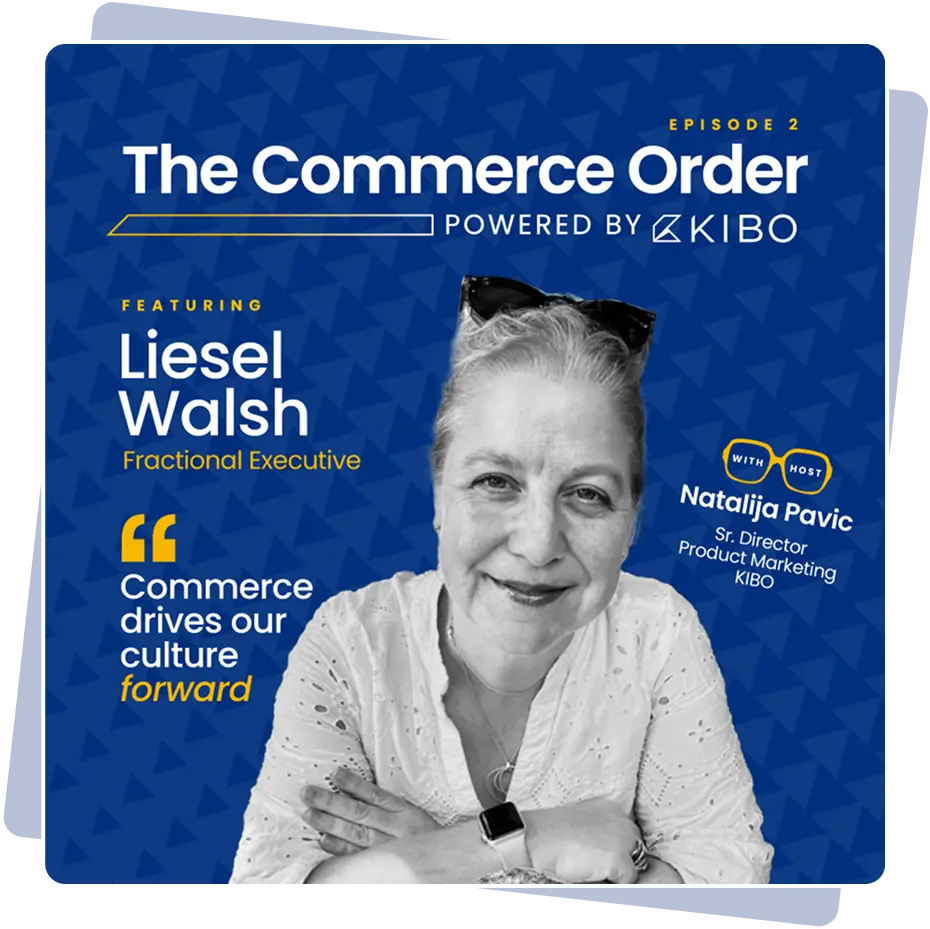
About the Guest

Liesel Walsh is the former eCommerce VP for brands like Boston Proper, Party City, and Restoration Hardware. She is an expert in transforming high-growth DTC brands by leveraging data-driven digital strategies, having successfully scaled e-commerce operations from inception to $500M. She uniquely blends marketing technology with customer-centric programs to achieve measurable growth across all channels. Currently, Liesel is focused on spearheading innovation in social commerce and driving sustainability initiatives within the retail sector.
Liesl Walsh, a digital retail transformation pioneer, explores the dynamic shifts in the shopping landscape, from fast fashion to immersive retail experiences. Drawing from her extensive experience with retail giants like Gap Inc. and Restoration Hardware, Liesl offers valuable perspectives into how e-commerce is redefining consumer habits, particularly for time-pressed parents.
The conversation examines the rapid rise of fast fashion brands like Shein and Temu, highlighting their innovative customer engagement tactics and the sustainability challenges they pose. Liesl also discusses the growing importance of personalization and technology in improving customer experiences. The discussion further delves into the concept of “distributed commerce,” where brand websites are becoming less central as consumers discover products through various channels, including social media and marketplaces. This shift impacts customer data ownership and necessitates new strategies for brands to communicate their value, such as adopting digital product passports for authenticity and supply chain transparency.
Show Highlights:
- Examination of fast fashion’s impact on retail, focusing on companies like Shein and Temu, their business models, and sustainability concerns.
- How personalization and strategic notifications enhance customer experience in modern retail.
- Insight into immersive retail experiences and how these experiences transform shopping into an event.
- The role of technology and data in enhancing customer engagement and personalization in retail.
- The rise of “distributed commerce” and its implications for brand websites and product discovery.
- The importance of digital product passports for authenticity and supply chain transparency.
Transcript
00:00.88
Natalija Pavic
Hello, welcome to the show. I’m so excited that you’re joining me here today. don’t you tell me a little bit about who you are and what you do?
00:07.57
Liesel
Hi, I’m Liesl Walsh. I am an active consultant for e-commerce and marketing. I’ve worked in many, many brands and channels over the years and I’m currently working with some different small brands, setting up e-commerce and doing their marketing.
00:26.83
Natalija Pavic
um What was the biggest team that you managed?
00:30.82
Liesel
I had to look back. I think it was, i had 28 people just in e-commerce when I was at Restoration Hardware. And interestingly, bulk of those people, maybe 15, were photo and post-production photo, which I think about, you know, we think about always, we’re talking about how important content is and asset creation that, you know, running a business that was $500 million the time in sales and 850,000 SKUs that we
00:44.84
Natalija Pavic
wow
00:56.15
Liesel
in sales and eight hundred and fifty thousand skes that we had that many people, that big of a percentage of the team devoted to asset creation. It’s pretty interesting.
01:05.33
Natalija Pavic
Yeah, and I’m sure we will talk about about this a little bit later. That’s probably going to change tremendously. ah But before we get there, um you know, you and I talk a lot about this idea that people are moving away from shopping on websites. Tell me more about that.
01:19.31
Liesel
Yeah, I think um it’s it’s really this distributed commerce idea where um as people built out their brands and their commerce brands and they were growing, we thought, oh, well, this is just going to grow and grow and grow and grow. But actually, distributed channels have become more and more important as creator economy takes off, as marketplaces take off, as you know Amazon, obviously, Walmart take off.
01:46.89
Liesel
and um People just need to think that they’re kind of maxed out. In many cases, their brand sites growth and also 80% of sales still take place at physical retail, right?
02:00.19
Liesel
The customer is still voting that way.
02:00.22
Natalija Pavic
Right.
02:02.07
Liesel
And so commerce in and of itself is is becoming, you know, the way that we thought about a branded e-commerce site is is becoming less relevant.
02:12.41
Liesel
And that as a hub for everything, everywhere else you sell is becoming more relevant.
02:18.75
Natalija Pavic
Right. Yeah. And I mean, with more channels than ever before, social, now agentic is a new one that’s being thrown into the mix. Now, we know in China, but, you know, 47 percent of orders are e-commerce, whereas to your point, 80 percent are still in store. You know, we in the West are benchmarking 20, 27 percent.
02:37.49
Natalija Pavic
um And yet, when we take a look at the East, none of it happens on a branded site, which is kind of very interesting. um with You know, could that be cultural or could that be an indication of what’s to come for us? but Where do you stand there?
02:51.82
Liesel
I think it definitely could be an indication of what’s to come. um we We spoke a little bit about, you know, brands being important here and brands in search, right, are becoming less important if they are, if they’re not making themselves important, right? So this thing about if I’m going to, if I’m discovering product on TikTok,
03:19.42
Liesel
what I’m discovering is likely the product, not the brand, right?
03:23.26
Natalija Pavic
Mm-hmm.
03:23.60
Liesel
So now I’m going to to find the product wherever it’s sold, whether it’s sold on the brand or not. It could be sold as it could also be a dupe, right? So um because we see that coming up with with trends, people are knocking things off and selling them very quickly, backslash dupe.
03:40.80
Liesel
um And so the the brand is is no longer discoverable in the same way. i may never go to your brand site. if I hear about your brand, I may only really come to you through the product because the way that I’m discovering is very different than the way it used to be.
03:57.50
Liesel
Right? Search engine listings for brands are no longer what they were. on your phone, the big you know, in Google now, the first four pages are taken up with, you know, AI summaries and other things that are not, your your your organic brand listings matter a lot less as do,
04:11.31
Natalija Pavic
Right.
04:17.76
Liesel
um your paid listings, frankly, because you’re so pushed down in the page and you’re also being discovered hopefully in other places like Reflexity and ChatGPT. There’s a whole other world of places where people are looking to discover or ask questions.
04:34.05
Natalija Pavic
Right. And, you know, the question is, what does that mean for your customer data? Right. So if people are and, you know, if people are discovering a product somewhere else. And I’m sure visual search makes things worse because visual search gives you similar items.
04:47.25
Natalija Pavic
Right. So if you could go on Google, enter in that photo and you’re looking for that address and all of a sudden you see that address, 10, 10 percent of the cost.
04:47.72
Liesel
Right.
04:55.68
Natalija Pavic
um So it’s pulling up a lot of stuff that as a brand you may be paying for, you know, um ah SEM. and maybe paying for ads and it’s just at the end of the day not reaching your target audience. so So now that you have to cater to marketplace listings, you have to do some form of dropshipping, what does that mean for the fact that you might not be owning your customer data as much as you used to?
05:22.74
Liesel
Yeah, I think this is where um we can learn a lot from CPG brands, right?
05:29.55
Natalija Pavic
Right.
05:30.22
Liesel
That if if I’m a brand that has built a reputation, product quality, all of those things, that my platform becomes the communication of the value of those products of the brand, regardless of where they’re sold.
05:44.56
Liesel
And I’m also trying to control the information that’s there. so We’re also seeing the advent of like a digital product passport requirements coming out of Europe. Those are interesting ideas and trails of data, if you will, that will help brands. And think about luxury brands are the most obvious example where, you know, the value of something and its authenticity is important where it came from, where it’s been repaired, who’s owned it is important.
06:16.34
Liesel
and And providing that you know kind of continuum of of information, regardless of where the product is transacted becomes important. So think about you know registering your product, right? You want the brand to know, i want Arame to know that I bought that Birkin bag and when and from whom, because I want the authenticity to carry with it for resale, to carry with it for repairs, to carry with it for You know, possibly in the in the future world, the brand could get ah piece of a resale um dollar because they they own the authenticity and the digital passport says, this is a this is a ah you know an authentic XYZ, right?
06:53.17
Natalija Pavic
Right.
07:01.55
Liesel
Same goes for for dupes, right? So even at the low end of the market, I really want the authentic product. I want the real tide. not the fake Tide, not the brand not the generic Tide. And so even in a commodity market, a brand like Tide really goes above and beyond to continue to hammer home that brand message, um the you know the access through digital to understand what’s important about the brand, to get people to engage.
07:31.12
Liesel
And, you know, back to something as crazy as couponing, right? Like we thought couponing was dead, but no, because I’m trying to manage the relationship and the pricing and the information to the customer directly and give the customer incentives to come back and tell me what their experience was like.
07:52.82
Natalija Pavic
I mean, that tight example is as excellent. I mean, i you know, you see those like very inspirational CPG um ads for, you know, sports events. I know there was like a PNG one for moms. It made me cry.
08:05.94
Natalija Pavic
But and it’s interesting if the storytelling is strong enough and if you get the point across of like. this is what’s in our tablet, here’s what it does, here’s what it has, then as a consumer, if I see ah ah a dupe, to your point, of that product, I don’t know what’s in it, I don’t have the story, i don’t trust that this is going to do or behave in exactly the same manner as Ty does, right?
08:26.23
Natalija Pavic
So you’re kind of, to your point, opening up this ah traditional, more traditional ah level of storytelling than we are sort of led to believe. um What do you think is there’s what’s the impact of personalization? Because when you don’t own the pane of glass, you don’t own the customer data, you know, you’re storytelling now in a distributed environment. um What is your capability to personalize or even know the eyeballs that are looking at at what you’re doing?
08:51.04
Liesel
Yeah. um I mean, I think that’s where, again, you’re you’re counting on driving engagement with the customer to try to directly, regardless of the commerce directly with you, to try to get a chance to tell that story.
09:07.30
Liesel
But also, there’s a lot coming with kind of modeling anonymous data to allow it to get down to a personalization level. And that is also about creating enough content, enough um personalizable, relatable, relevant content versions to serve things to people on a one-on-one basis. And that’s where Of course, we get to Gen.AI where you know understanding the attributes that are important to a specific person about Tide, um to go back to our Tide example, allows them to change the ads so that what they’re seeing, even though it’s again it’s not going to direct commerce, um what they’re seeing is really relevant to them.
09:45.16
Natalija Pavic
Yeah.
09:54.70
Liesel
right so I can understand on a on it anonymous an anonymized basis that you are somebody who is looking for things to do with children’s clothes.
10:05.63
Liesel
And so maybe my Tide messaging has to do with, you know, children’s clothes and dirt, getting dirt out of it.
10:11.48
Natalija Pavic
ah Yeah, well, and then also the channel the channel where you’re on, like if you’re in the children’s category of Amazon, then your PDP description might be a little bit different.
10:14.68
Liesel
Right.
10:19.31
Liesel
Right.
10:19.71
Natalija Pavic
But I mean, that goes to set an idea sort of we that comes up in our conversations, which is the product discoverability. So, it’s you know, we’re ah used to living this world where You find the product, we show you the product that you’re interested in but that may be sort of upended and flipped into like the product finds you because the product was meant for you and the product needs to have all this data that it doesn’t have today, which Gen.ai has the capability to improve.
10:38.89
Liesel
Yes.
10:44.84
Natalija Pavic
Tell me more about some of those data challenges that you’re seeing frequently.
10:48.80
Liesel
Yeah. So i I see this on a whole spectrum, a whole level of spectrum that, you know, merchants who build the products are not particularly you know they they And and i like speaking from apparel first, right they they want they they think about merchandising from kind of from the heart, right from this level of creativity that does not in and of itself involve a lot of data work and describing this product work. providing the specific dimensions or all those things, even though those things are part of the makeup of the product, right? When you build a tech pack for apparel, it has every single dimension, every seam allowance, every, everything in it so that the factory can make the product. Right? So, so those, those data elements exist.
11:42.19
Liesel
The, there’s always a, um, like a, you know, between the marketing people and merchandising people about how much product copy to, to,
11:52.62
Liesel
use, how much um how much data. Now with product records complete, we don’t have to argue about using up words for describing things that the merchant is like, the customer can see it’s a white shirt.
12:05.33
Liesel
We don’t need to say it’s a white shirt. No, we don’t need to say it’s a white shirt, but we need to tell the the crawlers that it’s a white shirt because the crawlers can’t see that it’s a white shirt.
12:16.16
Liesel
so being able to put these variables, extensive lists of variables together, and now using Gen AI to do the work, to describe, to get to the dimensions, to pull together other sources of data like tech packs or PDF or, you know, right um I work with somebody who’s doing this for,
12:36.91
Liesel
large scale corporate commercial refrigerators, right? Like how much drier could that information be? And yet it’s missing.
12:44.51
Natalija Pavic
Yeah.
12:45.35
Liesel
It needs interior dimensions, cooling elements, where exactly the plug is like all these things, you’re buying a $30,000 refrigerator. You want to be able to see every dimension of it.
12:56.70
Liesel
And the data exists in the product manuals, but it never has existed in the commercial records that somebody could search or see. So if I’m looking for a refrigerator for a very specific spot, I need to know all of those dimensions, right?
13:11.12
Liesel
To say, oh, this one will work versus that one.
13:11.60
Natalija Pavic
Yeah.
13:14.24
Liesel
And we’ve left that work historically to like humans, right? This is where we were talking about a B2B order where, you know, you would call a sales rep and they might run out to the back with a measuring tape and try to figure out what, because nobody really recorded that stuff.
13:18.56
Natalija Pavic
Right.
13:21.26
Natalija Pavic
Yeah.
13:28.62
Liesel
Now it’s all available for you. And again, go back to digital passports.
13:31.46
Natalija Pavic
Yeah.
13:34.27
Liesel
in ah in a commercial refrigerator situation, a 35 or $40,000 reach in, you have its entire lineage. Where did it go? How was it resold?
13:44.69
Liesel
What you know what was wrong with it?
13:46.41
Natalija Pavic
Yeah.
13:46.71
Liesel
How is it fixed? How often has it’s cool and been refreshed? All these things that are super interesting that become part of this digital record. And space is essentially cheap and free.
13:57.74
Liesel
So how do we you know expand these records and then make those things sort of available for discovery in Americans are, um, I just heard this, I’m sure you have too, that search has gone from an average of four words to 24 words in the last couple of years.
14:14.88
Natalija Pavic
Oh, really?
14:15.82
Liesel
Yeah. And that’s coming also from, from chat GPT. So what’s interesting is that pattern. Um, I was just at the commerce next conference, that pattern doesn’t seem to be translating into people’s commerce sites, their brand sites yet.
14:30.67
Natalija Pavic
Yeah.
14:31.38
Liesel
They’re still searching kind of keywords and when they give people the opportunity to search more, they don’t really do it, but they are living in that world in ChatGPT, right?
14:40.51
Natalija Pavic
That’s so funny.
14:40.60
Liesel
Very complex queries and then ChatGPT is asking them back follow-up questions. So then they understand like, oh, I searched this, but it’s saying, would you also like links for these items? Would you also like photos for these items? Would you also? And so then people start to build those into the queries right up front.
15:00.78
Liesel
So the first pass is more complex, more complete.
15:03.79
Natalija Pavic
Wow. Yeah.
15:05.18
Liesel
Right. So, but again, i don’t, if I don’t have that data in my product record, it’s never going to come up if somebody is searching for the dimensions of the commercial reach refrigerator.
15:06.44
Natalija Pavic
Yeah.
15:11.57
Natalija Pavic
yeah
15:18.44
Natalija Pavic
i think I think how you described the conflict between merchandisers and marketing reminds me of the conversations I have with my hairstylist. like I’ll just be like, make it make it funky, but you know punk rock, and like people will look at me and think, oh, maybe she has an interesting job.
15:39.26
Natalija Pavic
And then my husband always looks at me, he’s like, what does that even mean? like Nat, they don’t know what you’re saying. I’m like, they know, they know they’re artists. Okay. They’ll figure it out. Um, but it’s gotten to the point where now I’m just like, i just show up with picture.
15:53.30
Liesel
But what’s so interesting, so at the same conference, there was a panel of Gen Zs and they were talking about how they shop and two things really stuck out, well, three things really.
16:04.52
Liesel
One, um for skincare, they were putting in the actual ingredients that they wanted and then looking for products that way. So to the point of the product finds you, they had researched the specific things, um you know, whatever acid, hyaluronic acid, all these things.
16:24.72
Liesel
And, and they wanted them in specific formulations. And so they, they were looking for the product to come find them. Like I’m auditioning this product.
16:31.63
Natalija Pavic
Yes. Oh, yeah.
16:34.28
Liesel
Basically here’s my specs.
16:35.00
Natalija Pavic
Yeah.
16:35.95
Liesel
You come to me, right?
16:37.14
Natalija Pavic
Who has it? Who has it?
16:38.41
Liesel
Who has that?
16:38.54
Natalija Pavic
Who has this product?
16:39.70
Liesel
Yeah, and then by the way, like who has the best price or the best formulation or the best access or the best that includes things I, you know, doesn’t include things I don’t want, right?
16:40.47
Natalija Pavic
That’s interesting.
16:44.13
Natalija Pavic
Right.
16:50.14
Liesel
um So that’s an interesting thing. And again, like you can’t get much more scientific and specific than that approach, which really surprised me.
17:02.28
Liesel
The second one was um discovery on TikTok for products They go to the, they search on TikTok, they get the videos, and then they look at the comments.
17:15.39
Liesel
Not at the content of the video necessarily, but the comments about the product.
17:18.27
Natalija Pavic
Right.
17:19.98
Liesel
So that’s their truth, right? And then they go find the product elsewhere, right? They’re not they’re not necessarily converting on TikTok shops through there. But these comments are super important.
17:27.88
Natalija Pavic
right
17:29.66
Liesel
And those comments aren’t, most people that I know of aren’t pulling in comments data into product, right? So that’s a whole separate place of wild, wild west about what’s happening with your comments.
17:42.77
Liesel
And then the third thing that they said, which I found also super interesting, and to your hairdresser comment, she took a picture of herself, her face, put it on into chat GPT and said, what sunglasses fit my face the best?
17:59.22
Natalija Pavic
Mm-hmm.
17:59.55
Liesel
So now we’re using a visual search. We’re using context and judgment based query to say from my face, I’m not telling you what shape it is. I’m not whatever.
18:13.98
Liesel
I’m depending on you to infer that context and then bring back somehow these this face, these you know, these frames to me. And that means a whole level of data that for sunglasses that I don’t think anybody’s really thinking about. We think about it in the context of your own website, allowing people to try it on their face on a picture.
18:37.80
Liesel
But that’s actually not asking for a judgment of the best or cutest or flattering or anything like that. It’s just you still, as a consumer, are like, which one of these looks best on me?
18:50.60
Liesel
and you’re sending that to your friend, you’re sending that to the to maybe to the store associate if you’re doing it in store. and This is implying that the the machine is actually able to give you a more objective judgment, right, and become your consultant.
19:05.45
Natalija Pavic
right No, and and you you know to your point, like
19:06.84
Liesel
So that’s a very interesting shift where I’m now, this is my store associate in a very different way than it has been digitally.
19:18.74
Liesel
Right. Because i I don’t really ever ask my try on things like, does this look good on me? Yes. And what’s good.
19:28.97
Natalija Pavic
Yeah, the GPT is not like GPT can come up with something that doesn’t exist. with The thing is best for your face and like you bet I’m doing this like right after this call it to see if the glasses I have are even remotely what they recommend.
19:42.08
Natalija Pavic
But but to your point, I’m not GPT is not trying to sell you what they have in stock. Or what they get commissioned on the most.
19:49.43
Liesel
Right, right. right
19:50.18
Natalija Pavic
You know, they’ll sell you something that they don’t even have and then you have to go find another provider. um And it’s that kind of like level of honesty that Gen Z and I’m sure eventually Gen Alpha will be expecting that our…
20:03.65
Natalija Pavic
generation and the generation prior may be charmed. i think I think certainly, i think Gen X and the boomer generation want it to be sold to in like a weird way that the new generation doesn’t understand or gets the ick.
20:20.43
Natalija Pavic
It’s like, really? You wanted to talk to the salesperson? Why? But it’s that kind of like, well, you know, it was like a relationship and it was cool to see what they have and they trusted them. And now that’s completely changed, as you mentioned.
20:34.22
Liesel
And it’s a very, there’s a very high awareness with a generation of like, or suspicion around being sold to, right? That they’re, you know, the message is, is, um and they and they, they quickly have a, you know, it’s like a point of pride to say, I under, I know when something’s sponsored, I know when something’s whatever.
20:41.83
Natalija Pavic
Yes.
20:53.69
Liesel
Yeah. So we all do, that doesn’t mean we, i think there’s like a, ah a ah pride around discounting that like, whether or not it impacts them truly, it is it like in their minds, they’re almost like, I don’t i don’t want to be sold to.
21:11.20
Liesel
I want to and don’t i don’t value that as much.
21:11.90
Natalija Pavic
Right.
21:14.37
Liesel
But somehow I value this the object objectivity of ChatGPT, which is the the crowd wisdom, right? Right,
21:22.86
Natalija Pavic
I trust machines more, which is kind of like the opposite of what the previous generation was all about because they wouldn’t trust machines. They don’t want to talk to a human.
21:28.54
Liesel
right. right
21:29.51
Natalija Pavic
Now we’re in the, like, we trust machines more than we trust humans, right?
21:32.20
Liesel
Right.
21:32.59
Natalija Pavic
Which is kind of interesting.
21:32.74
Liesel
And I think in the example of the science of the, of the skincare thing, really, really right.
21:37.42
Natalija Pavic
Yeah. Yeah.
21:38.71
Liesel
So I don’t know that I trust, um, chat GPT to really be my, um, my, my guru on skincare, but in, in that sense, they so think it’s a better source of truth than the brands themselves.
21:56.26
Natalija Pavic
Yeah.
21:56.37
Liesel
Right.
21:57.72
Natalija Pavic
I realize this is a little bit late in your interview, but could you define a digital passport? I was like, you said it and I was like, what is that?
22:04.24
Liesel
Oh yeah.
22:04.62
Natalija Pavic
And then i I sort of got started to gather context, but I forgot to ask you 20 minutes ago.
22:07.15
Liesel
Yeah. yeah Yeah.
22:10.12
Natalija Pavic
So wondering if you could define that now.
22:10.40
Liesel
Yeah. Sure. So um in the EU, I don’t, I don’t remember the name of the legislation, but there’s um ah a requirement by 2027 to have products have a digital passport to be, um that actually defines the um the materials it’s made of.
22:29.63
Liesel
where those materials are sourced from, and um to be able to sell the product in the EU.
22:31.72
Natalija Pavic
Yeah. Wow.
22:36.39
Liesel
And this is for everything. There’s no, you know, dollar threshold that something can be below, you know, talking about a 10 cent bubblegum item, it’s it’s still in the same digital passport.
22:50.36
Liesel
that There’s got to be a way to scan it and basically understand the ingredients.
22:50.69
Natalija Pavic
wow
22:54.93
Liesel
And this is coming primarily from, initially from a drive um to be able to recycle things and dispose of them properly, but then also a broader kind of desire to really understand what chemicals are in things.
23:02.39
Natalija Pavic
Yes, yeah.
23:09.61
Natalija Pavic
Right.
23:09.87
Liesel
Um, you have situations where cotton, for instance, coming from the Uyghur region and China is restricted from being sold in certain countries. So that also is the idea that you have, um, you have this history of, of the product and where it really came from.
23:27.95
Liesel
They’re even talk, I don’t really understand how it’s going to kind of work out from a practical perspective, but they’re talking about the components of what’s in the tag. Right.
23:38.68
Liesel
So if you have a a paper tag, it’s made from what recycled paper, and it you know and there’s a plastic attachment for the tag that all these things would become part and parcel.
23:38.72
Natalija Pavic
Yeah.
23:51.24
Liesel
um There is also some interesting technology that’s coming that kind of sidesteps that, at least for apparel, that scans the product and and is able to differentiate, like, here’s a zipper, here’s the components of this. This can be recycled, this can’t be recycled, and so so on so that they can break it down and and dispose of it properly.
24:08.88
Liesel
But um it’s ah it’s a big challenge to get rid of all this stuff that we’re making in an environmental way and in a sustainable way, because a lot of these things could be repurposed, reused, recycled, refabricated.
24:14.89
Natalija Pavic
That’s so interesting.
24:22.18
Liesel
But if you don’t understand the components of them, you’re kind of behind the, behind the then it’s a very super manual process and it’s not, um it’s ah just sustainable.
24:33.85
Natalija Pavic
Well, I mean, this sounds really new. And I mean, um thank you for educating us on that. I think and we talked a lot about this before. I think NFC or non-fungible coins, I forget what they’re called now, but but basically Web3 tech might sort of be used.
24:45.91
Liesel
Yeah.
24:49.20
Natalija Pavic
not Probably not everywhere because I imagine it’s not going to be standardized. And some people will do it that way. Some people will just create a database just to meet the requirements. so But I think um there’s an opportunity for…
25:01.95
Natalija Pavic
you know This idea that I’ve had that I’ve been trying to like just put out there, popularize it. Hopefully somebody picks it up, somebody hears it, and they’re like, yeah, we should build that, um which is like that we should have Web3-based loyalty cards where we can share our data.
25:13.97
Natalija Pavic
and Could you imagine handshaking your digital passport to be like, here’s my preferences, here’s what I want for my skincare routine, here the glasses that look the best for me, find me.
25:20.67
Liesel
Mm-hmm.
25:25.06
Natalija Pavic
you know agent or whoever interface we have, find me the products that I need. And then you have that digital handshake with the digital passports to actually pull that in, in a truthful way that’s vendor and agnostic and escapes the gravity of influence. Because I think that there’s a, like right now, brands are playing the influence game. you know They’re playing the how much can I influence sales How much can I get customers to buy? And customers are rebelling.
25:57.24
Natalija Pavic
The new generation rebelling against them and saying, you can’t influence me. I have to make an informed decision. um and so this could be a different way of building products, right? Because if you know what people want, then you can change your product assortment to build the things that they’re looking for as opposed to guessing and then trying to influence the purchase of those items, right?
26:17.27
Liesel
Yeah. There’s a really interesting company called Benny, B-E-N-I, that is um is coming from a sort of a circularity perspective. They allow you to build sort of your wish list, your closet wish list.
26:32.68
Natalija Pavic
Mmm. Mmm.
26:33.86
Liesel
And then on the other side to build a portfolio of what you wish to sell. Right? So I’m building my closet as it is. I have this kind of idea of these these digital attributes of the specific thing, right? It’s this item, it’s in this size, it’s in this condition, it’s and I’m looking for it.
26:55.67
Liesel
And so when you you can you can save into Benny a product that you see that’s new, Or for instance, I tried, it didn’t quite work perfectly, but I saw um this stunning dress at Bryant Park Opera the other night. And I was like, took a picture of it and tried to find it in Benny, through Benny, right? So I was like, find this dress. we We ended up, I was like coordinating with my friends in the audience and we ended up going, one of us went and talked to the woman and said, where’s your dress from? And she said, rent the runway. And then we looked it up on rent the runway and we found that it was a SIMCHI dress, which we couldn’t find in the data from the picture.
27:33.34
Liesel
But I’ve now earmarked this dress and I’m stocking it used, right? And I’m looking for it in a specific size, specific color, and I’m really ready to buy it at a price of at least, you know, a minimum of $200, let’s say.
27:50.59
Liesel
And the dress itself new is, you know, if I could even find it is like maybe $750. So I’ve created this, like exactly what you’re saying. And now I want the product to come find me.
28:01.56
Liesel
Oh, I lost you.
28:43.58
Natalija Pavic
Hi, you’re back.
28:44.74
Liesel
Hi.
28:45.90
Natalija Pavic
I’m sorry. um
28:46.90
Liesel
That’s okay.
28:48.29
Natalija Pavic
Did you record a whole spiel after that question?
28:50.69
Liesel
I did. It seemed like it was still recording.
28:53.37
Natalija Pavic
ah did, it probably did. Can you, hey, let me pause it. So, I mean, that’s great. And and I, this Benny app seems like it’s going in the right direction and has the right idea.
29:04.40
Natalija Pavic
um Now, if it sort of suggests products, let’s say from certain marketplaces or from certain companies and then they like don’t get delivered, or they don’t get delivered on time, you know, that could now influence whether or not that’s a repeat purchase. Like if I find my the my perfect glasses, but I just, I can’t buy them.
29:22.82
Natalija Pavic
There’s not a lot I can do there. I have to go to the next best set of glasses. So talk to me about the importance, the elevated importance of supply chain and distribution in this post-influence world. Let’s call it that.
29:35.95
Liesel
Yeah. So i I think it also goes back to this idea of the real truth, right? So it’s not, to your point, it’s not helpful if you find me the perfect set of glasses, but they’re actually not available, or you can’t tell me where to get them or, um or you tell me they’re available, but really they’re not right.
29:51.31
Natalija Pavic
Right.
29:57.98
Liesel
comes down to that single, you know, being able to manage a single skew, a single unit of the thing that I’m looking for and really know I have it. um Because you’re, you’re kind of, you’re being penalized. If you don’t have it, you say you have it, you charge for it, then it’s not there.
30:17.28
Liesel
And even the the the the met the kind of the over the governing apps, maybe we call it, right, that are recommending those things, if the the brand or the vendor continues to be out of stock or over promise or under deliver either reviews or, you know, any of those things, there starts to be a ah ah penalization that happens, right?
30:42.50
Liesel
um TikTok will delist you, shops will delist you if you don’t have what you say you have, right?
30:49.17
Natalija Pavic
Right.
30:49.30
Liesel
and And in that kind of consistent pattern, you’ll you’ll be like, whatnot. I don’t know but you know whatnot, right?
30:55.38
Natalija Pavic
Yeah.
30:56.74
Liesel
Same thing. Like, if you if you don’t have what you say you have, then you get penalized and you get shut down. And so there’s this also you know, kind of governing idea that you have to have really good control of your data, not just the attributes of the product, but also the inventory also, where is it coming from?
31:13.06
Natalija Pavic
Right.
31:14.23
Liesel
And you may be fulfilling out of multiple locations and it’s tough to manage that. Like that’s not a small task logistically. And it’s very tough to keep track of just one item.
31:26.72
Liesel
Right. um It just, it it is, it it doesn’t seem like it should be, but you’re talking about millions and millions and millions of SKUs. So yes, it is. um And to to keep track of it, you know, shipping out of locations, there’s damages, returns, there’s lost inventory all the time, stolen.
31:43.34
Natalija Pavic
yeah
31:43.74
Liesel
Yeah, it’s really
31:45.81
Natalija Pavic
Yeah, and I mean, the the with you know coupled that with the digital passport, not only are you tracking what it’s made of, but where it’s sourced, where it’s built, because the standard for manufacturer there may be different or the quality for manufacturer there may be different.
31:59.31
Natalija Pavic
And so that impacts consumer choices. um And so now you have this added complexity not only do I have real-time inventory, do I have the data on where it’s sourced, where, how it’s traveling, can I put that in a digital passport?
32:11.58
Natalija Pavic
um What are the ingredients and the item rate? um And certainly, you know, if you’re selling on multiple channels, when you control your own website, you can say, yes we can commit to selling 5,000 units.
32:25.84
Natalija Pavic
But when you’ve also opened up TikTok, Amazon, marketplaces, and in-store inventory, you can’t flood your one store with all the TikTok sales and then people come to the store and they can’t buy the item they’re looking for.
32:32.45
Liesel
Yes. Right. Mm-hmm.
32:40.64
Liesel
right
32:40.77
Natalija Pavic
So how do you allocate you know safety stock? How do you allocate dedicated inventory to dedicated locations? And then how do you know what to set? It’s like, well, how much should I give it How much do I expect? What can I predict? And so it becomes now the complexity of of distributing increases.
32:59.00
Natalija Pavic
um So, all right. um ah so Second last question. are In your opinion, are returns really that bad? And the reason I ask this is, and we’re As being e-commerce practitioners, we have a fundamental belief that e-commerce will continue to benchmark up um against the store, will continue to to grab market share.
33:20.82
Natalija Pavic
But as it does so, returns increase necessarily with it um in a way that is not linear. So we think of our returns rate as being static, but it’s actually not. The more people buy, the higher the percent that they return.
33:33.96
Natalija Pavic
Is that ah something that we must sort simply learn to ah deal with and learn to manage post-return? Or is this something that we need to, as an industry, continue to try to minimize? What’s your take?
33:46.96
Liesel
um We definitely need to minimize it. I think that comes from, you know, better product information, better customer information around, you know, if I’m willing to give you a body scan, then you can help guide me to the right thing.
33:54.68
Natalija Pavic
Yeah.
34:02.30
Liesel
Being consistent, I mean, and back to apparel again, but being consistent in sizing.
34:02.75
Natalija Pavic
Mm-hmm.
34:06.92
Liesel
And then also really understanding the customer cycle where it’s abuse versus, um, you know, just kind of the the nature of the equivalent is I’m bringing 10 items into the dressing room and i’m buying one.
34:22.46
Natalija Pavic
Right.
34:22.87
Liesel
That’s a 90% return rate.
34:26.17
Natalija Pavic
Yeah.
34:26.39
Liesel
and so So you have to understand like some of it’s the process, some of it’s data that we can help with, some of it’s just purely customer. There is an element of customer abuse that happens where, you know, we used to joke about, you know, finding opera tickets in the and the ball gown.
34:37.04
Natalija Pavic
Yeah.
34:42.13
Liesel
um, in the pocket of the ball gown and item that was returned. Right. So clearly worn tags left in tucked nicely underneath and, and I’m just operating as a rental service essentially with no income.
34:53.75
Liesel
So those things are, those things, those things continue, right?
34:55.53
Natalija Pavic
A rental service with no income.
34:58.41
Liesel
Because the customer is, um, is savvy and uses it for what it, it, um, you know how they want, but then it, it, it is important that the things, um,
35:11.96
Liesel
you you I mean, in dresses, you could have an 80% return rate, right?
35:16.80
Natalija Pavic
wow
35:17.79
Liesel
Because they’re hard to fit.
35:17.95
Natalija Pavic
That’s insane.
35:19.31
Liesel
The higher the ticket, the more likely people are to return because if you’re paying $20 for a dress, you’re like, ah ah, whatever, it doesn’t really fit.
35:20.26
Natalija Pavic
Yeah.
35:27.22
Liesel
I’m going to keep it because it’s annoying to return it. If you’re paying $2,000, you’re sure as heck not going to
35:29.92
Natalija Pavic
yeah
35:33.00
Liesel
return you’re going to return something that’s not exactly, exactly perfect. And maybe actually also if you’ve worn it. But, the you know, so it’s it’s a massive factor and it’s extremely costly, right? If you’re running a 25 or 30% return rate, you’re you’re touching that item multiple times.
35:53.04
Liesel
you’re paying fulfillment costs there and back in a lot of cases. It’s, it’s, it’s really debilitating. So, um, I think it is a thing that everybody needs to think about and, you know, minimize as much as possible, but that’s also from a quality perspective, right?
36:09.97
Natalija Pavic
Right.
36:10.00
Liesel
Sizing, right. Mm-hmm.
36:12.47
Natalija Pavic
Sizing or potentially even attracting the right customer, like knowing who your target audience is. And, you know, if you’re marketing one thing, but you’re selling a different thing, you have a mismatch and none of your dresses actually fit the customers are attracted to your brand, then that to your point, it’s not just data, it’s also strategy.
36:27.64
Natalija Pavic
It’s also development, product development.
36:28.62
Liesel
Right.
36:29.86
Natalija Pavic
So this is like a very complex issue. um Very interesting. um Last question. What was the last thing you bought online?
36:38.48
Liesel
Oh my gosh. um
36:44.52
Liesel
I mean, it’s it’s so funny. It’s like a daily, right? Almost.
36:47.52
Natalija Pavic
Yeah, it is.
36:48.64
Liesel
um I probably bought sunscreen.
36:55.45
Natalija Pavic
Yeah, you know what? I respect that. I respect that. You know what’s good for you.
37:00.20
Liesel
My fancy sunscreen.
37:01.80
Natalija Pavic
Yeah, there you go.
37:02.30
Liesel
I did not look up the ingredients in ChatGPT, but maybe I should.
37:04.58
Natalija Pavic
ah
37:09.67
Natalija Pavic
ah That’s okay. You are forgiven.
37:12.35
Liesel
Yeah.
37:14.12
Natalija Pavic
Well, Liesl Walsh, thank you so much for joining me today. It was a pleasure to talk to you again.
37:20.09
Liesel
Thank you so much, Nat.
37:22.03
Natalija Pavic
And to everyone else, until next time.