
Understanding your customers’ shopping behaviors can help you make more informed decisions around sales and marketing strategies, pricing, inventory management, and more. One of the key metrics companies track to understand customer behavior is average order value (AOV). AOV not only reflects the average amount a customer spends during a single transaction but also serves as a key indicator in the company’s ability to optimize sales and marketing strategies and enhance the customer experience.
Ecommerce AOV can vary by industry and traffic source. According to Statista, Direct traffic has the highest AOV for online orders at $120, and social media traffic holds the lowest AOV at $88. The home and furniture industry leads with the highest AOV across industries at $258.
There are several changes you can make across the customer journey to increase AOV—from homepage to checkout. In this article, we’ll cover the top ways we see leading companies increase their AOV so you can maximize the value of each customer interaction and ultimately drive revenue growth.
Test Out Different Bundle Deals, Discounts, and Promotions
The power of a good promotion or deal can often persuade shoppers to buy more than they initially planned. According to a study by 2 Visions, shoppers are 7.6% more likely buy a typical, normal-priced item because of scarcity and 178% more likely to buy the item if it’s discounted by 30%.
There are a few types of discounts you can test to see which has the most impact on AOV:
- Free Shipping: Many digital commerce businesses offer free shipping on orders that meet a minimum purchase requirement. This tactic encourages customers to add more items to their cart to meet the free shipping threshold, thus increasing AOV. Make sure the minimum requirement is strategically set to maximize your profit margins.
- Tiered Pricing: Tiered pricing options allow customers to receive discounts for buying in bulk. For instance, you can offer a single product at one price, a bundle of three at a discounted rate, and a bundle of five at an even lower rate. This encourages customers to buy more to get the best value.
- Limited Time Offers and Flash Sales: When customers believe they have a limited window of opportunity to secure a discount or a special deal, they are more likely to add extra items to their cart to take advantage of the offer.
- Product Bundle: Companies will often bundle popular products and price at a lower rate compared to buying the products individually. For example, Proactiv, the beauty brand famously known for its skincare regimen, sells all of its products through an online direct-to-consumer (DTC) store. While shoppers have the option to buy products individually, they receive a 30% discount when subscribing to product bundles.

Upgrade Your Merchandising Strategy with Cross-Selling and Upselling
One of the most effective ways to increase AOV is through upselling and cross-selling. Upselling involves encouraging customers to purchase a more expensive version of the product they’re interested in, while cross-selling suggests related or complementary products. These techniques are often used by Amazon and other eCommerce giants as well as B2B and DTC companies.
For instance, if a customer is buying a camera, you can upsell by suggesting a more advanced model with additional features, or cross-sell by recommending camera accessories like lenses, tripods, or memory cards.
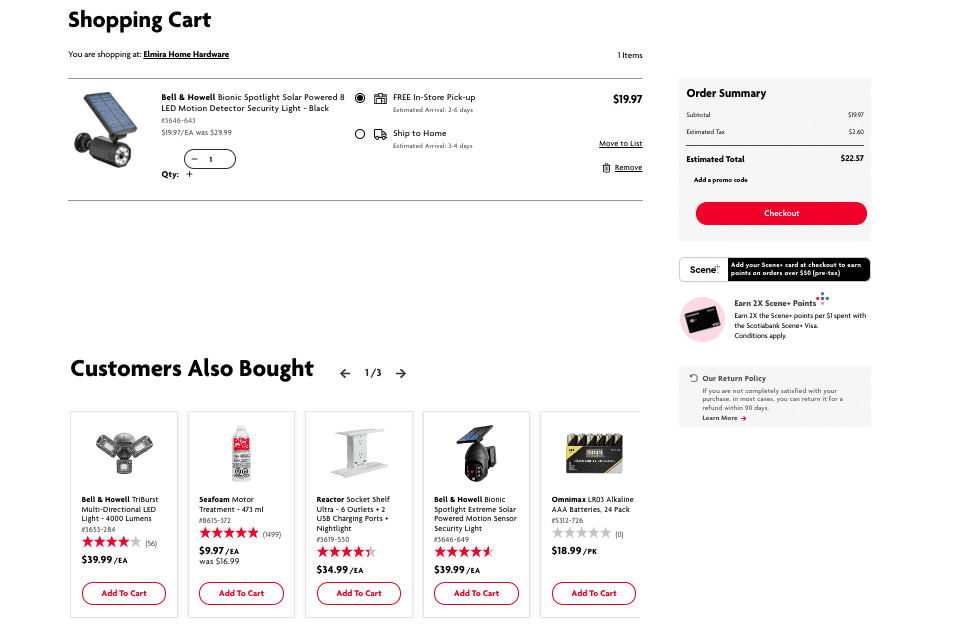
Home Hardware does this exceptionally well by strategically presenting similar but slightly more expensive products on product detail pages just above the customer reviews. Once a shopper adds an item to their cart, they will also see recommended products in the cart and a “other customers also bought” section during checkout. Using Kibo eCommerce, Home Hardware has been able to optimize its overall merchandising strategy—resulting in a 52% increase in AOV.
Provide Detailed Product Information and Educational Content
Information is power, and this is especially true for browsing shoppers. Leveraging the product description, specifications, images and other information to instill confidence in the customer’s purchase can help increase conversion rate and AOV. When customers have a better understanding of how to use your products, they may be inclined to purchase additional items that enhance their overall experience.
For example, Nivel, a specialty automotive parts manufacturer and distributor, uses Kibo eCommerce to manage its complex product catalog and present key information potential buyers need to make informed decisions. On the product detail pages, shoppers will find detailed descriptions around installation, specifications, features, and more. After adding more detailed product information, Nivel saw a 127% increase in AOV.

Streamline the Checkout Process
Simplifying the checkout experience reduces the chances of cart abandonment and encourages customers to add more items to their orders. When the process is quick, intuitive, and efficient, customers are more likely to complete their transactions without hesitation. Additionally, a streamlined checkout often provides opportunities to highlight related or complementary products, prompting customers to consider additional items.
Overall, a smooth and user-friendly checkout process fosters trust and confidence among customers. When shoppers have a positive experience during checkout, they are more likely to feel comfortable exploring options like product recommendations, upsells, or cross-sells.
Implement an Abandoned Cart Recovery Strategy and Consistent Shopping Cart
It’s great to implement a few merchandising or discount strategies to encourage higher AOVs, but what about after the shopper hits ‘add to cart’ and abandons their cart? There are a couple of ways you can still save the sale and encourage the customer to complete their transaction.
- Abandoned Cart Recovery: Implementing an abandoned cart recovery strategy helps remind customers about items they left in their carts. In your abandoned cart communications, you could Include incentives like discounts or free shipping to entice them to complete their purchase and potentially add more items to their order.
- Consistent Shopping Cart: A consistent or universal shopping cart across channels refers to the seamless and unified shopping experience that customers can enjoy when they interact with a retailer across various platforms and touchpoints, such as an online store, mobile app, or social media. This can lead to a higher AOV as customers are more likely to add additional items to their cart when it’s convenient to explore products and complete purchases across different channels.
Tap Into Your Customer Loyalty Program
Loyalty programs often provide incentives and rewards to customers for spending more. For example, customers might earn points or receive discounts for each purchase they make, but only if their order surpasses a certain threshold. This encourages customers to add more items to their cart to reach the qualifying amount.
You could also take a tiered approach where the more a customer spends, the higher their loyalty status and the better the rewards. Additionally, if you use your loyalty program to grant members early access to flash sales or exclusive promotions, you can entice them to make larger purchases.
Why Focus on Increasing Your AOV
Whether you’re a marketer focused on improving marketing campaign performance or an eCommerce director aiming to improve overall online store revenue, there are several business benefits to tracking and increasing your AOV.
- Increased Revenue: One of the most direct advantages is higher revenue. By encouraging customers to spend more during each transaction, you’ll significantly boost sales and overall income.
- Customer Loyalty: A higher AOV often correlates with a higher customer lifetime value. Implementing the strategies mentioned above will improve the overall customer experience, leading to happier customers.
- Inventory Management: AOV insights help you plan inventory more effectively. By understanding which products contribute the most to AOV, you can focus on stocking and promoting those items, reducing excess inventory of lower-value products.
- Efficient Digital Marketing Spend: With a higher AOV, you can achieve a better return on investment (ROI) from digital marketing efforts. Also, it’s easier to convince leadership to allocate resources towards customer acquisition if you’ve proven to maximize the value of each customer.
- Data-Driven Decision Making: AOV data provides valuable insights into customer behavior, preferences, and purchasing patterns. You can use this data to make informed decisions about pricing, promotions, and product offerings.
Overall, tracking and increasing average order value is a strategic approach that can lead to increased revenue, profitability, customer loyalty, and overall business success. It enables companies to optimize sales strategies, make data-driven decisions, and create a competitive edge in the market.